Social Icons

Friday, February 27, 2015

Why does Delhi need urban ecology? How to implement the same?


With an ever increasing population and a layout that fosters various ways of embracing urbanisation, metropolitan cities must indicate a paradigm shift towards participation in the conservation efforts of nature and wildlife. An urban ecosystem involves the convolution of intense human population offering economies of scale and novel types of interactions between the components of nature

What is Urbanisation?

With over 95% of urbanised population, Delhi stands out as the embodiment of the urban age in the Indian subcontinent. Urbanised Delhi has grown into the central focus of economic development and has been known to tackle the challenges of the dynamic social, technological and economical structures quite well. But what forms the crux of urbanisation? What parameters go into gauging the scope and the implication of urbanisation?
Economic and technological progresses alone do not contribute in establishing urbanisation. Urbanisation must take into account a complex set of cultural, conservational and environmental processes that together nurture the effective sustenance, growth and development of the metropolitan city.

Why does Delhi need an urban ecology?

As much are the benefits of taking the urbanised route, it has also caused some irreversible damages. Hugely populated metropolitans such as Delhi become the point source of pollution, depletion of nature and the place of production for several toxic substances. Ecologists thus far have been unable to derive the essential ecological inputs from these cities and have eschewed metropolitan cities as insufficient contributors for solving current environmental issues and preventing potential trouble of the future. 
An urban ecosystem that encompasses all facets of holistic growth is a strong need to sustain and develop the socioeconomic setup of the city. Ecologists working with these urban ecosystems must engage in deeper understanding of the social and economic requirements and relate them to the ecological footprint of the city.

A strongly established urban ecology is the need of the modern era and it is only by means of an optimized urban ecosystem that we can differentiate a well-functioning city from a dysfunctional urban centre.

Measures to adopt an urban ecosystem in Delhi

The first approach to establishing an urban ecosystem is to understand the various perspectives of human participation and to integrate these patterns into establishing long term conservational programs. In other words, the social perspectives of the residents must be matched with the environmental perspectives through deeper collaboration. 
In order to successfully establish an urban ecosystem for the long term, interdisciplinary discussions between ecologists, scientists, urban engineers, eco-political researchers and economists must be facilitated. The participants must have a clear understanding of the long term goals of the programs and the versatility of the solutions must be highlighted through proper implementation.

Nature Unbound


The requisition of nature within the walls of wildlife sanctuaries and nature reserves and through restrictive laws may be good reminders of what we choose to conserve against human intervention but however they will not serve as the only means of the preservation of natural resources in the long run.  

Wednesday, February 4, 2015

Artificial Recharge: The Cure for India’s Groundwater Depletion


Water is the most precious natural element. Not surprisingly, it is also the most used and therefore, the fastest depleting resource.
While water is being used in several ways, urban cities mostly depend on groundwater consumption, owing to its wide availability and easy accessibility. From small-scale users like domestic households, to larger industries and agricultural farms, groundwater is needed on a daily basis. This has led to its indiscriminating extraction and use, facing the human population with a major crisis, which, if not dealt with in time, can result in catastrophic consequences.


The high rates of usage and limited natural recharge have led to the severe depletion of the water table, resulting in acute dearth of drinking water in several parts of the country. The problem escalates during summer, when the yield of several groundwater wells and tube wells often comes down to zero. Today, more than seventy-two percent of the country falls under the ‘crucial zone’ due to groundwater over-exploitation.


Groundwater levels in India. Red indicates depletion and blue indicates recharge

What’s the solution?
One compelling solution to combat groundwater depletion is artificial recharge, a method of manually augmenting the amount of groundwater. This method has been prevalent in India for some 30-40 years and has been successful in various parts of the country.
The first phase of artificial recharge was before 1960, during the Green Revolution, when groundwater was still abundant. The second phase was between 1960 and 1990, and the third phase is from 1990 till date, when groundwater depletion rate has risen to an alarming rate (Todd, 1980).
However, artificial recharge is not a new phenomenon. This method of conserving water has been in use since the ancient times and even now, tanks and ponds are found all over peninsular India that are used for drinking, washing, bathing and irrigation.

Methods of Artificial Recharge
Artificial recharge of groundwater can be done in either direct or indirect ways or a combination of both.

Direct Methods
Flooding: In this method, water is spread as a sheet on flat topography. This water then vertically infiltrates to replenish the amount of groundwater. This works well when the aquifer is shallow.
Basins: Another method for shallow aquifers, this involves filling basins with water. This water percolates into the soil and adds to the level of groundwater. The amount of water entering the aquifer depends on the infiltration rate, the percolation rate and the capacity for horizontal water movement. (Todd, 1980)


Source: www.nicra-icar.in

Natural wastewater treatment can also be used to recharge groundwater by allowing treated waste water to percolate into the soil.

Source: www.nicra-icar.in

Ditches and Furrows: In areas with irregular topography, ditches and furrows provide maximum water percolation. This technique requires less soil penetration and is less sensitive to silting. (0’Hare, at al 1986)

Recharge Wells: This works like a tube well and is used to pump in treated surface water. These wells can also be used as pumping wells during summer. This is a costlier method of artificial recharge as it requires a special kind of tube well construction. (Image below: bore well recharge. Source: sswm.info)

Indirect Methods
The indirect groundwater recharge is done by setting up pumping stations near hydraulically connected water bodies, like lakes and streams. The amount of surface water depends on natural factors like the amount of rainfall and its frequency. (0’Hare, et al1986)

Modular rain water harvesting can also be classified as a form of indirect recharge as this water is stored in an underground water storage tank and then diverted to existing wells. Water conservation can also be done by creating rooftop gardens that not only combat pollution and increase rainfall but also help in storm water management, resulting in less erosion and floods.


Source: sswm.info


Success Stories
Andhra Pradesh: The Andhra Pradesh Farmer Managed Groundwater System has taken voluntary steps to reduce groundwater pumping, successfully.
Gujarat: Several water conservation and recharge projects have been highly successful in Gujarat, like the Sardar Patel Water Recharging Programme, that built check dams in association with the villagers, and Gujarat Green Revolution Company, that propagated sprinkler and drip irrigation technology.

Check dam
Chennai: Rainwater harvesting was made mandatory by an ordinance in July 2003 and all buildings were required to have rainwater harvesting structure.

The Last Word
It is not too late to save Nature and prevent groundwater depletion. We cannot stop the use of water but we can take measures to stop indiscriminate and unsustainable exploitation of groundwater. Artificial recharge is a movement in India, promulgated by the government, NGOs, community leaders, farmers and local people. The challenge now is to carry it into the future with the help of research and development programmes that will resolve the water depletion problem to a great extent.


References:
Central Ground Water Board (1994), Manual on Artificial Recharge of Groundwater, Government of India
Todd, D.K. (1980), Groundwater Hydrology, Wiley, New York
O’Hare, M.P., Fairchild, D.M., 1986, Artificial Recharge of Groundwater


Saturday, January 3, 2015

Prevalent Guidelines for Lake Conservation in India


Lakes have always been a major source of safe and clean drinking water. Rapid urbanization and poor upkeep of the existing lakes have resulted in starvation and silting. In addition, general indifference towards these water sources have further resulted in poor quality of the water that is in these lakes. However to improve the situation, in India, there are prevalent guidelines drawn out by central government. This guideline is to be followed by state governments and help them with the objective of lake conservation in India.


Then, the major guidelines which are available in the form of ‘Guidelines for National Lake Conservation Plan’ are to manage and properly revive polluted and degraded lakes that fall under semi-urban or urban areas. These guidelines thus are not essentially for rural lake management. In such cases, cues could be drawn from the existing guidelines and utilized as per rural requirement.


In case of urban and semi-urban areas, it is not only the level of water that needs to be monitored and maintained but it is also the quality of water which is considered. Contrary to the rural area, where water quality is maintained as a common responsibility, in the urban and semi-urban area, it is imperative. Hence, in these areas, apart from level of water, prevention of pollution through treatment or intolerance towards waste discharge in the lake is executed through lake conservation plans. 

Sewage also poses a threat and hence it is also taken care of through the plan for lake conservation in India. Further, schemes are utilized in accordance to rain water harvesting modules ensuring that the level of water is maintained sufficiently. Among others, some of the prevalent guidelines for lake conservation in India are mentioned below.


  • In situ measures of lake cleaning such as de-silting, de-weeding,  bioremediation, aeration, bio-manipulation, nutrient reduction, withdrawal of anoxic hypolimn ion, constructed wetland approach or any other successfully tested eco-technologies etc depending upon the site conditions.

  • Catchment area treatment which may include afforestation, storm water drainage, and silt traps etc.

  • Strengthening of bund, lake fencing, shoreline development etc.

  • Lake front eco-development including public interface.

  • Solid waste management2 & provision of dhobi ghats is generally not covered under NLCP.

  • Prevention of pollution from non-point sources by providing low cost sanitation.

  • Public awareness and public participation.

  • Capacity building, training and research in the area of Lake Conservation.

  • Any other activity depending upon location specific requirements.


These guidelines wherever employed properly have yielded great results and have been able to turn around the fate of dying and polluted lakes. However, it is just not possible to achieve results such as conservation of lakes, only by following certain guidelines. Rather, there have to be continuous and dedicated effort in the line of maintaining the water level and restricting any sort of pollution from degrading the quality of water in the managed lakes. When, these objectives are achieved and managed continuously, the lakes remain a quality source of safe and clean water.

Monday, December 22, 2014

A Detail on Artificial Lake Development and Its Use


An artificial lake is a man-made body of freshwater on a location where a natural lake may not occur. The process is carried out with human intervention and secures freshwater in an area, especially where water is not in abundance. This ensures a natural storage of water. Artificial lakes are generally constructed to allow the people and surroundings to secure an access to freshwater without having to face undue hardship. 


The size of artificial lakes may vary from one location to another depending upon natural conditions. The geographical and physical characteristics play an important role in the creation of such man-made lakes. A lake can be constructed to be more effective and beneficial in an area which does not see much water flow throughout the year. This method of preservation of freshwater not only boosts the amenities of people but also helps in the beautification of the surrounding. 


Natural elements like water and rocks enhance the beauty of an area. It is thus a wonderful idea to enhance the beauty of a surrounding with the creation of a man-made lake. This can also serve multiple purposes at the same time. 


One of the most important aspects is the preservation of groundwater supply. The lake can serve as a reservoir of water and helps in greater biodiversity. The natural effects can be seen in the blooming of life and greenery. It is evidently successful with farmers and other people coming up with an increased number of livestock. It also helps with improved irrigation process and gives a better produce every season. Such a lake comes handy when water is needed but geographical factors affect this supply. Freshwater lakes can also increase chances of fishing. It can be combined with shrubs and small plants for a picturesque view as well. 


Construction of a lake requires precaution than merely digging a hole in the ground. It must be ensured that water is retained and it does not soak through the soil. There are thus additions of one or several layers of clay to prevent the seeping of water to the ground below it. The addition of a synthetic layer is also preferred lately. Once done, there must also be scopes of filtration of the water body and controlling of the temperature, if required. 


However, when planning for the construction of an artificial lake, there are several factors that must be kept in mind. One of these is the source of water for the lake. The source of water for filling the lake can be vital in areas where there may be deficiency of natural water. In this situation, rain water can prove to be a good source. Rain water harvesting can come into play for such lakes. This water can be preserved for the time when there would be no rain at all. 


In addition to this, run-off of lake water is also an important aspect. A good channeling system prevents the lake from flooding and ensures the health of the lake. This proves beneficiary both for livestock and agriculture.

Wednesday, November 12, 2014

What Are Roof Top Gardens and How They Benefit the Environment?

Rooftop gardens, till some years back have only been known to enhance the aesthetics of the buildings. The concept of these gardens are however very old and dates back as early as mature days of Babylonia. 2700 years old, hanging gardens of Babylonia are excellent examples of roof top gardens. However, till global warming became a worldly affair and people became conscious about how they could reduce negative impacts on environment, these gardens were not popular as a method to sooth the environment.

The rooftop gardens as the name suggests are small trees and shrubs planted above the soil level. It can be either in a terrace or the roof. There are various types of roof top gardens basis their access. If it is accessible then it is known as intensive and if it is not accessible easily then it is known as extensive garden. Special type of porous layer and surfaces are used to install these green areas. Generally, a typical polypropylene-based cellular drainage system is also used ensuring the watering of plants does not hamper the roof and also the water does not go waste.


These gardens whether intensive or extensive are a great way to improve the look of the building. And along with improving the aesthetics these gardens are also benefit the environment in more than one ways. Some of the ways in which these gardens benefit the environment are as follows.


Reduces Heat: Yes! Every bit of vegetation contributes in its own significant ways to alleviate the urban heat. It is widely known that temperature in societies or urban living centers are more than that around the fringes of the city or the urban space. In a way, if you maintain a roof top garden, it reduces the heat of the surrounding and reduces the temperature considerably.


Air Quality: Whether it is shrubs, bushes or small plants, all of them act as air purification channel and therefore a rooftop garden significantly helps in reducing the level of carbon content from the air. It also blocks other types of pollutant contained in the air and purifies the air in a general sense. Though a single rooftop garden could not contribute considerably, but if the society or an urban living space has significant number of rooftop gardens then the air quality does improve considerably.


Stormwater management: At the time of rain, rooftop gardens enjoy their share of rainfall and since they are modeled over a porous structure and have an advanced drainage system attached; therefore, the storm water can be easily collected and managed as a larger part of rain water harvesting. These gardens thereby help collect and store rain water through storm water management procedures.


Energy Savings: As per studies conducted in Tokyo, it has been found that if an urban space or a society has got considerable number of rooftop gardens then these gardens help reduce the temperature of the surroundings. This in turn implies less usage of air conditioners and fans to keep the internal temperature of the buildings to the desired level. And hence, rooftop gardens are also helpful in saving energy and the environment.


Wednesday, October 29, 2014

How We Can Manage Storm Water and Use It for Our Daily Needs

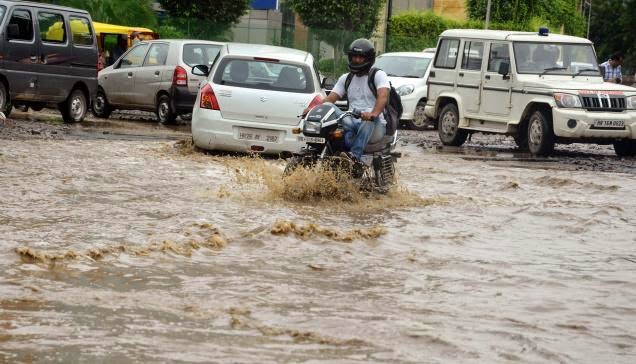
The landscape especially in urban area is predominantly impervious and do not allow rain water to seep into the soil level. Buildings, roads, parking areas, pavements and other such structures cover the soil level with layers of concrete making them unable to absorb storm water. This also leads to excessive soil erosion in case of urban flooding. Sewage system gets choked as flash flooding occurs in urban regions. Moreover, apart from losses due to these, the greatest loss is that of wastage of water. In some of the regions where clean drinking water is scares, storm water can fill in the requirement but it is not possible unless it is managed properly and channelized for daily needs.


Among several ways that are normally used to manage storm water, the best and most economic way is that of rain water harvesting. Storm water, is accumulated precipitation during the rainfall, which does not find any ground suitable to seep in. In case of urban area, the total surface area that contribute to storm water is very large and thus the amount of storm water is also too much. All these water, either go into the drain and get wasted or flows out of the urban region and end up unutilized. Then to use this water it is required that either urban area is designed in a way that rain water finds soil surface to seep in or the rain water is directly collected and used as required.


The former method is costly and more often than not, it is also quite impractical. The reason being, it is not possible to remodel an already existing urban space. Even if it is envisioned, the cost of the same will run into unimaginable figures. However, for a limited space, such as societies, specific building and other such area, measures such as use of grassed swales, bioretention cells and green parking design could be used effectively and economically. But for the larger scenario, the best method is to use rain water harvesting.


In this method, the rain water is collected as it precipitates on impervious surfaces. The collected water is channelized to a storage tank. It is then filtered and treated, if required, and then supplied back to for usage. Moreover, another added advantage is that the whole setup is highly economical and lasts for years without involving any major maintenance cost. The system of rain water harvesting can be installed anywhere as most of its mechanism can be fitted underground. Even the storage tanks can be well placed below the ground; thereby, not hindering the aesthetics of the place.


Large playgrounds, community space, parks, even pavement areas can be suitably used for the purpose of water storage through rain water harvesting. Moreover, this system is also used successfully in rural area that has got short supply of ground water. In such areas, the system of rain water harvesting is installed beneath the barren land and rain water is collected in the tanks. The water, is then utilized for irrigation and thus do not require filtering or any sort of treatment. This saves a lot of cost to the farmers and also provides them with a reliable source of water for irrigation.

Tuesday, September 23, 2014

Rain Water Harvesting Boon for Drought affected areas of India

Today, there  is no dearth  of well-designed, smart and affordable rainwater harvesting systems which are easy to install, manage and maintain. With negligible operating costs and convenient ways of providing water at various points of consumption, these systems are becoming increasing popular in all parts of the world. In this case, rainwater is collected from the catchment of the roof or other areas and is used for applications like laundry, toilet flushing, site irrigation, custodial uses, bathing water purposes and so forth. 

In general, rain water harvesting is done by using existing structures like the roof. Along with very negligible environmental impacts, this form of gathering water boasts of several other benefits too. Read on for a deeper insight into the world of harvesting rainwater and the ways in which it is bringing about positive improvements in the lives of many.

Cost Effective 


Rainwater is free. Here, the only cost involved is that for its collection and use. As it lessens the demand placed on the municipal water supply, it leads to great savings on utility bills too.

Diminishes Erosion and Flooding

Collection of excessive rainwater diminishes flooding, flow to water drains and erosion. It also leads to lesser contamination of land water by fertilizers, sediments and pesticides from polluted rainwater run-off—therefore resulting in cleaner rivers, oceans, lakes and other recipients of storm water.

Recharging of Ground Water and other Benefits


This harvesting system proves to be very useful for recharging ground water. Stored rain water does not contain pollutants, man-made contaminants, minerals or any other kind of chemical salts and is a good resource for irrigation and leads to healthier outputs. Rainwater is soft in  nature , good for laundry and lowers the need for extra detergents. As it does not lead to corrosion or scaling like hard water, it adds a lot more years of life to equipments that require regular water supply for their functioning.

Total Control over Deficit of Water Supply


With population figures booming like never before and more areas reeling under the bad effects of urbanism, there is an increase in pressure on the available resources of water, globally. Most homes are devoid of 24/7 supply of drinking water and they have to depend on rationed amounts of water–for commercial and domestic purposes alike.
Under the circumstances, rainwater, which is oft considered as the purest kind of water on Earth, comes to the rescue and helps you get greater control over the water supply. Ideal for areas with rigid water restrictions and depleting sources of ground water, this environmentally responsible and socially acceptable way of accumulating water is promoting self-sufficiency  and helping water conservation—and in a big way!


More Benefits…..

Along with helping people get a ready supply of water for their day-to-day chores and other specific activities , rain water harvesting is also beneficial for:
   •    Reducing storm water runoff from businesses and homes alike;
   •    Creating backup sources for municipal water, wells and emergencies;
   •    Better landscaping of gardens and lawns with non-chlorinated water, and so forth.
So, what are you waiting for? Install the best rainwater harvesting system for your immediate requirements and get rid of your water related woes, today.